

A Brief History of TainanfuIn 1602, the Netherlands established the Dutch East India Company (VOC) to explore business prospects in Asia. The Netherlands had invaded Penghu in 1604 and 1622 to occupy a trading spot in East Asia. However, since the Ming Dynasty frequently defended this territory, the VOC retreated from Penghu to Taiwan. Acquiesced by the Ming Dynasty, the Dutch founded Fort Zeelandia and Fort Provintia in Tainan as the trading and administrative centers of it colonization in Southern Taiwan. Even after the Ming Dynasty was replaced by the Qing hegemony in 1644, Ming forces continued to attack and try to reassert power. Among the counter forces, Koxinga (1624-1662), Zheng Cheng-gong, took Taiwan as a base to conquer the Qing Dynasty. In 1661, he defeated Dutch forces by capturing Fort Zeelandia and Fort Provintia. He established Cheng Tian Fu and founded the Zheng Kingdom in Tainan. In 1863, Shi Lang (1621-1696), a Qing official, made a conquest and ceased the Zheng’s 22 years of governance in Taiwan. In 1684, Taiwan was included in the Qing’s territory and its capital city was located in today’s Tainan. 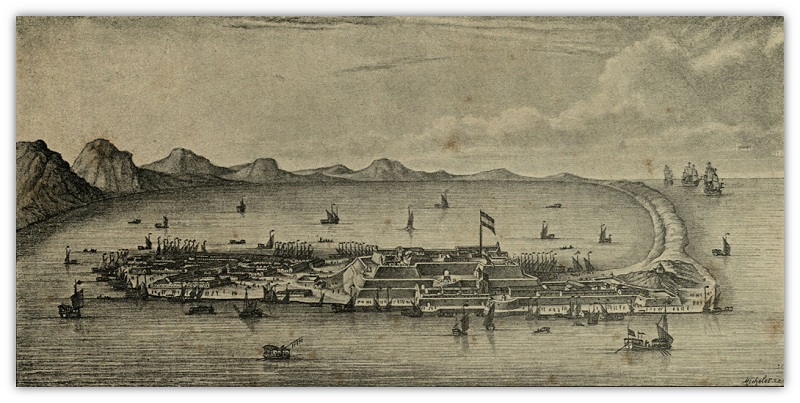 圖1:Le fort Zélandia au temps de l'occupation hollandaise. A sketch of Fort Zeelandia during Dutch colonization, as portrayed in 1671.
Source: Identifier: A0231_00_00, Taiwan Rare Book Collections A Brief Journey through TinanfuThe Qing official Shen Bao-zhen (1820-1879) was born in Fujian, Houguan. After the Mudan Incident broke out in 1874, he was assigned to Taiwan to negotiate with the Japanese army and to reinforce defensible constructions in Taiwan. He not only built artillery batteries in Anping and Kiau but also sent vessels stationed in Taipei, Xiamen, and Fuzhou. He asked the emperor for permission to develop the arable field and to rearrange the administrative divisions. In addition, he built the temple of Koxinga in order to comfort local people. He also commissioned students at the Fuzhou Naval College to draw Taiwan maps and pictures of indigenous customs, creating precious records of Taiwan and the indigenous people at that time. 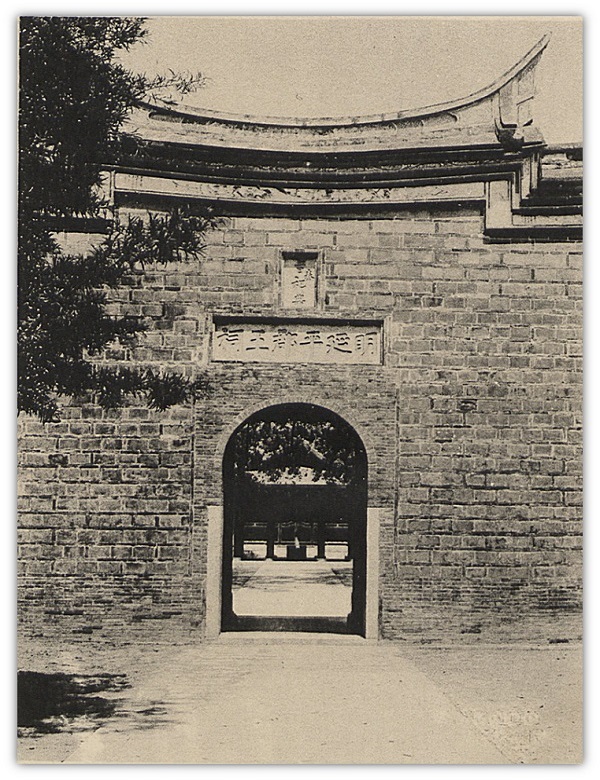  Figure 2: The main gate of the Koxinga Temple and its statue.
Source: Identifier: A0151_00_00, Taiwan Rare Book Collections  Figure 3: The ruins of Eternal Golden Castle in Anping.
Source: Identifier: A0167_00_00, Taiwan Rare Book Collections 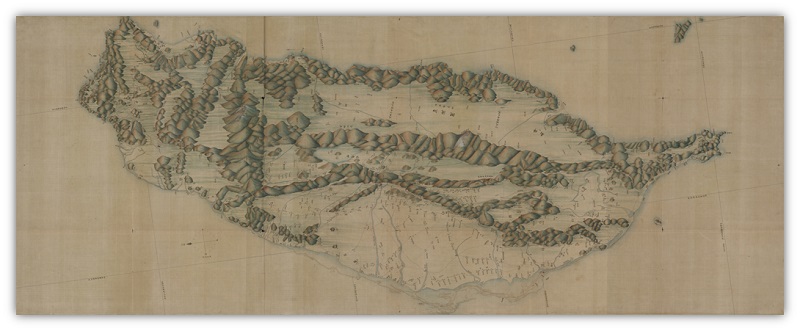 Figure 4: A map of Taiwan in 1875.
Source: Provided by the Palace Museum (Peking)  Figure 5: A portrayal and description of trading between Han Chinese and an indigenous Taiwanese community in the 1870s.
Source: Provided by the Palace Museum (Peking) |
  |