


| 2017-08-30 |
|
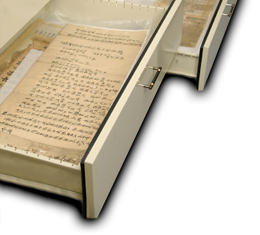
Wu Song-qing (1901-1991) was born in Zhen-hai, Zhejiang. After graduating from University of Shanghai and University of Paris, he had held the position of Director in Management Bureau of Air Navigation Commission, Vice Director of Quartermaster Department and Director of Management Bureau of Conscription Agency, Head of the Department of Finance of Hubei Provincial Government, Director of Department of Finance of Combined Service Forces, Director of Quartermaster Department and Vice Commander-in-Chief of the R.O.C Army. In 1964, he resigned from the army and threw himself into industrial sector. He had been the Chairman of Tang Eng Iron Works Co., Ltd and was the pioneer of Taiwan steel industry. Wu Song-qing had written diaries since he served as Head of the Department of Finance of Hubei Provincial Government in 1947. He stopped writing diaries in 1991, the year he passed away. The newly released diaries (1947-1950) were written in the critical period of the KMT government retreating to Taiwan. As the Director of Department of Finance of Combined Service Forces, he recorded the management of raising military expenditure and the plan of transporting gold to Taiwan. The full-text transcription and interpretation of Wu Song-qing’s Diary I (1947-1950) has been collated and uploaded. Volume I of Wu’s diary contains 1,017 articles in about 210,000 words. Currently, there are 14 volumes of diaries containing approximately 14.5 million words. Anyone is welcome to register an account at Taiwan Diary Knowledge Bank and access the materials. |