



*
Homepage


01/17 (Sat)

Closed Today

*
Visiting the Dadaocheng Customers of Tai-yi-hou in Nagasaki through Time Traveling

Publication date: 2013
Author: Chen Qiu-jin |Staff member of the Archives of Institute of Taiwan History

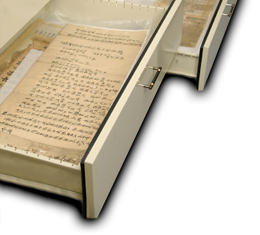
The Chinese enterprise Tai-yi-hou in Nagasaki, one of the figures in Traveling in Time Exhibition, was established in the beginning of the 20th century. Its commercial trade network crossed East-Asia including the treaty ports in Vladivostok, Korean Peninsula, coastline of China, Taiwan, Luzon, Malay Peninsula, etc. Tai-yi-hou’s customers were mainly Chinese merchants in Taiwan and Southeast Asia. Since Taiwan became the colony of Japan in 1895, the Japanese Government proactively increased economic and trade relationships between Japan and Taiwan. Within this context, Tai-yi-hou gained the upper hand in expanding its business to Taiwan with its advantageous location, language and culture. Among all Tai-yi-hou Papers, approximately 17,000 commercial letters sent from Taiwan were preserved until today, and around 10,000 of which were sent from stores in Dadaocheng.
*
III. Conclusion
Dihua Street of Dadaocheng still has several historical architectures from the Qing dynasty and Japanese colonial period, each with different architectural features. As time goes by, the appearance of old building can be maintained and repaired by architectural techniques, the people who once lived in the buildings and the stories which had happened in the past can only be recorded by related historical sources and archival documents. The Chen Family who ran Tai-yi-hou in Nagasaki preserved a great amount of commercial letters from East Asia, providing precious clues for reconstructing history. The Commercial activities of the Century-old Stores on Dihua Street are as vivid as we read the handwriting on the letters.

11F., South Wing, Building for Humanities and Social Sciences, 128, Sec. 2, Academia Rd., Nangang Dist., Taipei City 11529,
Taiwan Tel: +886-2-2652-5181 Fax: +886-2-2652-5184 【Contact us
Copyright © 2010 Institute of Taiwan History, Academia Sinica. All Rights Reserved