

*
Homepage


03/04 (Wed)

Opening Hours 9:00-17:00

*
Listening to the World Locally – The Homecoming Tour of Taiwanese Musicians

Publication date: 20 Aug 2024
Author: Lee Yi-ling, Wang Li-Chiao | Staff member at the Archives of Institute of Taiwan History

Ninety years ago, in August 1934, a group of young Taiwanese musicians embarked on the first Western music concert tour in Taiwan’s history. The Homecoming Concert Tour began with great fanfare during the scorching summer of the South Island, kicking off at the Taipei Medical School Auditorium. With a packed itinerary, the tour traveled southward, stopping at public assembly halls in Hsinchu, Taichung, Changhua, Chiayi, and Tainan, before culminating in a final performance at the Kaohsiung Youth Hall. Despite the demanding schedule, the musicians delivered exquisite piano melodies and harmonies to audiences across Taiwan, sparking widespread acclaim.

This article focuses on Taiwan’s first “Homecoming Concert Tour,” which was rapidly organized in just over a month. The program primarily featured Western musical compositions. During the scorching summer of the South Island, this grand musical feast unfolded with enthusiasm, traveling from north to south with seven performances. It offered audiences across Taiwan an auditory delight, broadened their horizons, and brought Western music closer to the local population. This tour marked the beginning of Taiwan’s musical diversity and led to Taiwan’s music being recognized on the Olympic stage, where Taiwanese music shone brightly on the global scene.

*
Today in History- From Showa to the Republic Era
2012-08-15

The Emperor broadcasted himself at noon on the 15th, claiming that the acceptance of Potsdam Declaration was for the sake of world peace and the future development of the Japanese nation; all the subjects should obey his will. Alas, an empire established by military power over 50 years was also lost because of it.

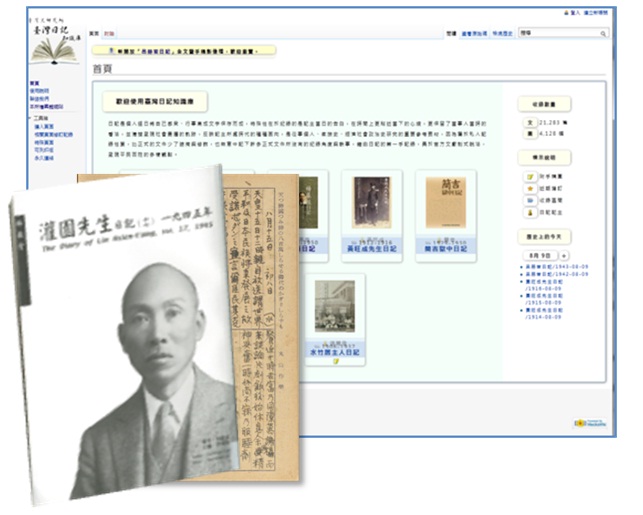
Diary of Lin Hsien-t'ang, August 15, 1945

On 15 August 1945, the Japanese Emperor Hirohito announced the unconditional surrender of Japan on radio broadcast. The World War II had ended, and the fate of Taiwan moved toward a different direction. How did the Taiwanese intellectuals perceive such dramatic change? How were Taiwanese people's life affected by it?

The diaries in 1945 and 1946 kept by Lin Hsien-t'ang, the Taiwanese cultural and political leader, provide valuable primary sources on this transition period. 730 entries and more than 1500 annotations are now available on the Taiwan Diary Knowledge Bank. Through these personal records, we can see how the Lin family lived their life suffering from the air raids and material shortages and how their house compound was "borrowed." After Japan's surrender, so many Japanese, Taiwanese and Chinese contacted Lin Hsien-t'ang regarding issues such as the future relations between Taiwan and Japan and maintenance of social order.

Social conditions and personal feeling revealed by diaries are often disregarded in the official archives, but they are undoubtedly crucial materials to understand and interpret the past. The Taiwan Diary Knowledge Bank features more diary entries of other Taiwanese during this period. It can be accessed at http://taco.ith.sinica.edu.tw/tdk.

11F., South Wing, Building for Humanities and Social Sciences, 128, Sec. 2, Academia Rd., Nangang Dist., Taipei City 11529,
Taiwan Tel: +886-2-2652-5181 Fax: +886-2-2652-5184 【Contact us
Copyright © 2010 Institute of Taiwan History, Academia Sinica. All Rights Reserved